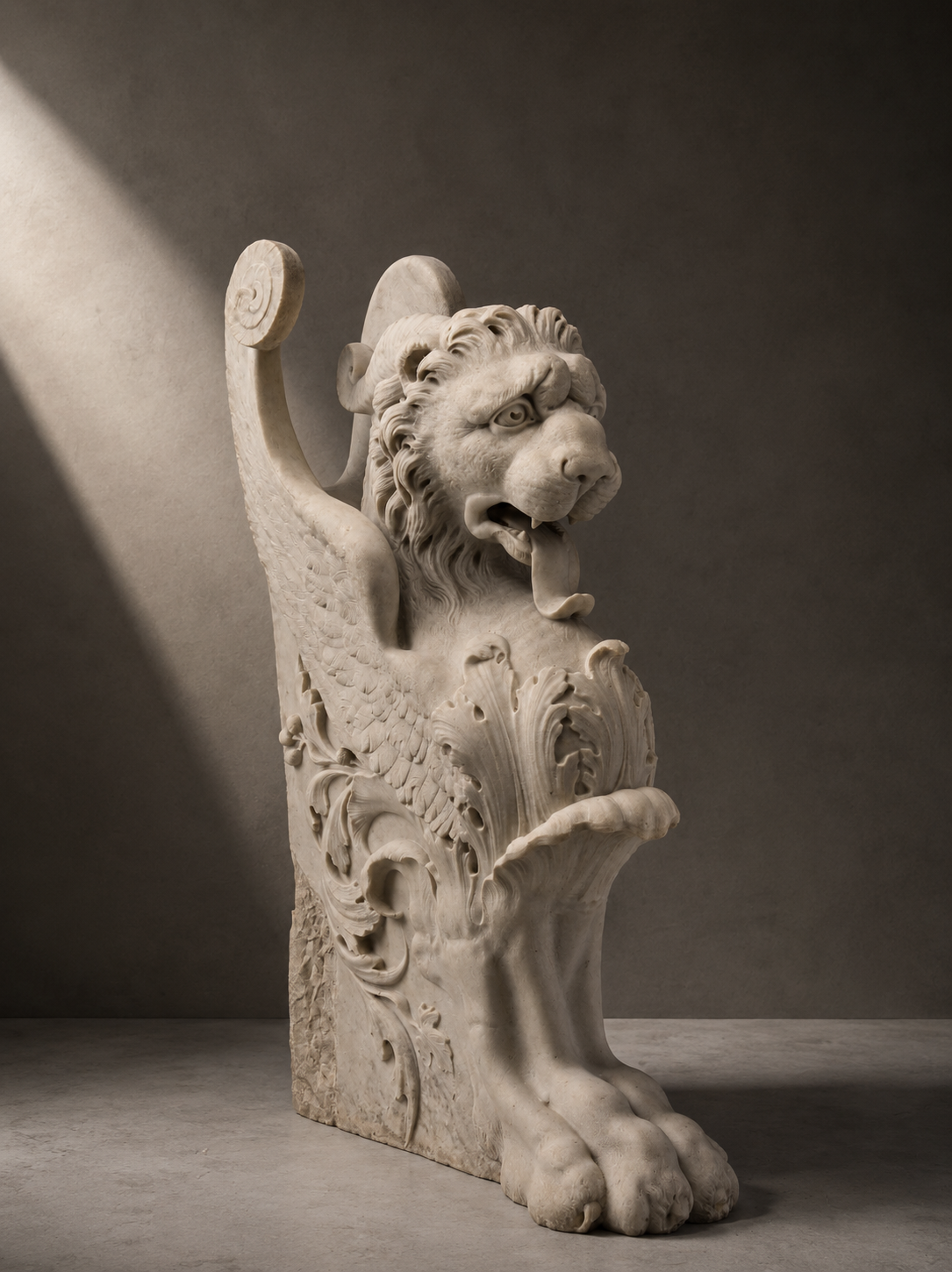
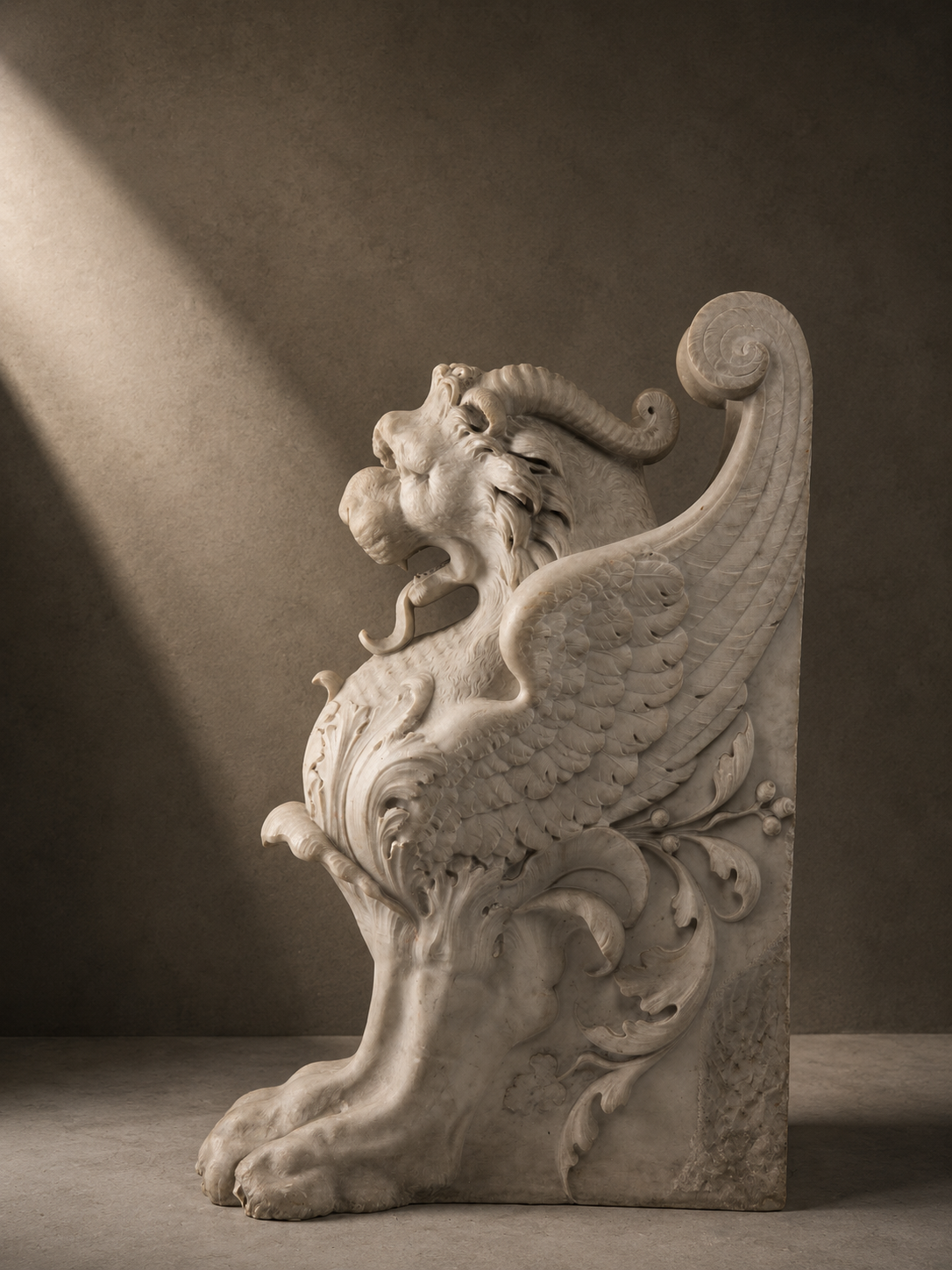
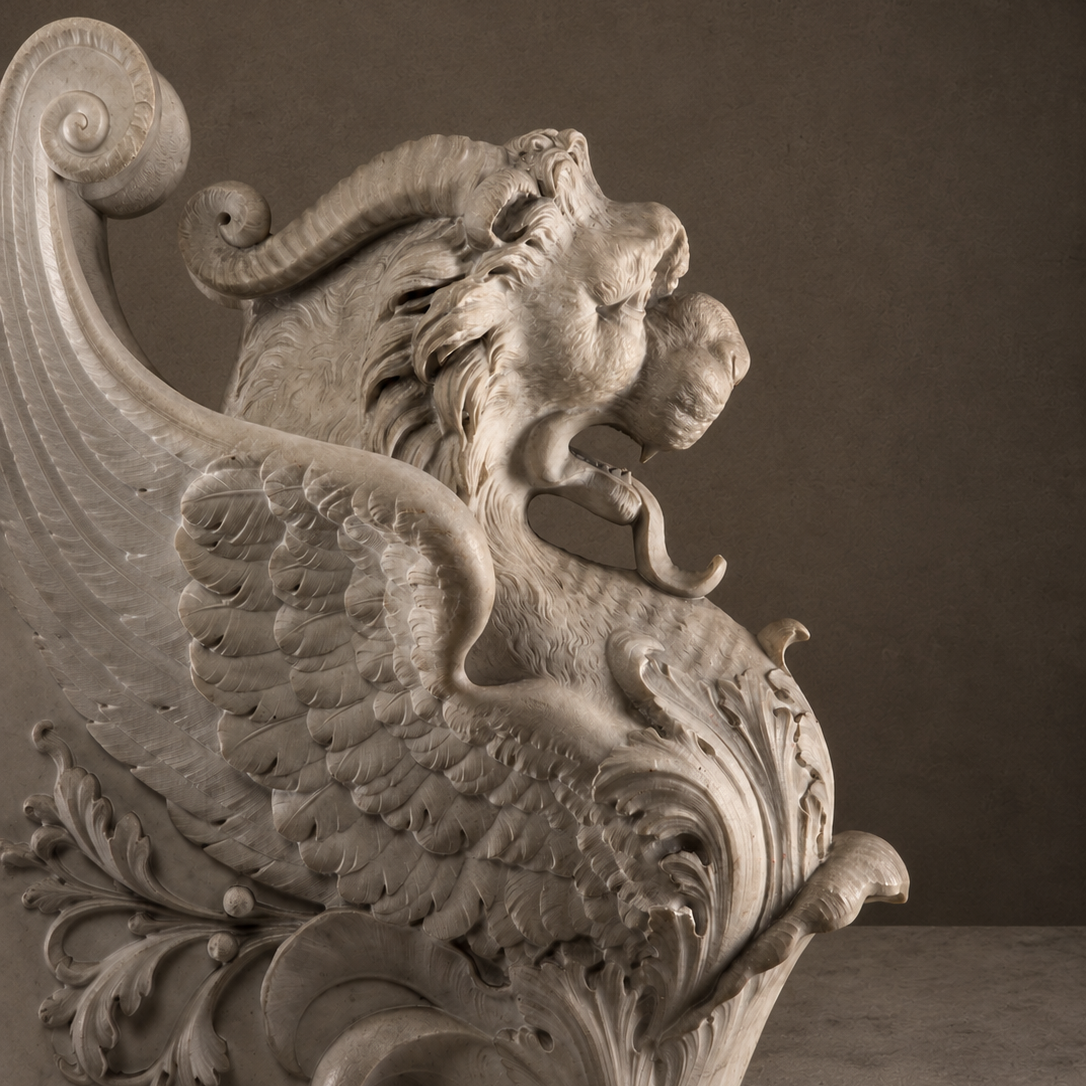
GRIFFIN
Italy, early 19th Century
marked 'F255'
marble
87 x 54 x 20 cm | 34 1/4 x 21 1/4 x 7 3/4 in
Provenance
Princely House of Liechtenstein, Vaduz Castle, Liechtenstein
Carved in marble with striking dynamism, the present griffin was conceived as an architectural ornament, most likely intended as part of a grand interior decorative scheme, perhaps adorning the base of a staircase, balustrade, or monumental architectural framework within one of the residences of the Princely House of Liechtenstein.
Depicted with the muscular forequarters of a lion and stylised wings, the griffin belongs to a decorative tradition rooted in classical antiquity and repeatedly revived in European architectural ornament. As a hybrid creature combining terrestrial strength with aerial power, the griffin long served as a symbol of vigilance, guardianship, and noble authority, making it an especially appropriate motif for aristocratic settings.
The present sculpture bears the inventory mark F255, consistent with historic collection numbering systems used to identify and catalogue works within the Princely Liechtenstein collections, where systematic inventory practices were maintained across generations.
The vigorous modelling and emphatic ornamental character of the work suggest an early nineteenth-century interpretation of classical forms, executed in the spirit of the neoclassical revival. Rather than a direct archaeological reproduction, the sculpture reflects the period’s imaginative engagement with antique decorative vocabulary, reinterpreted for elite European interiors.