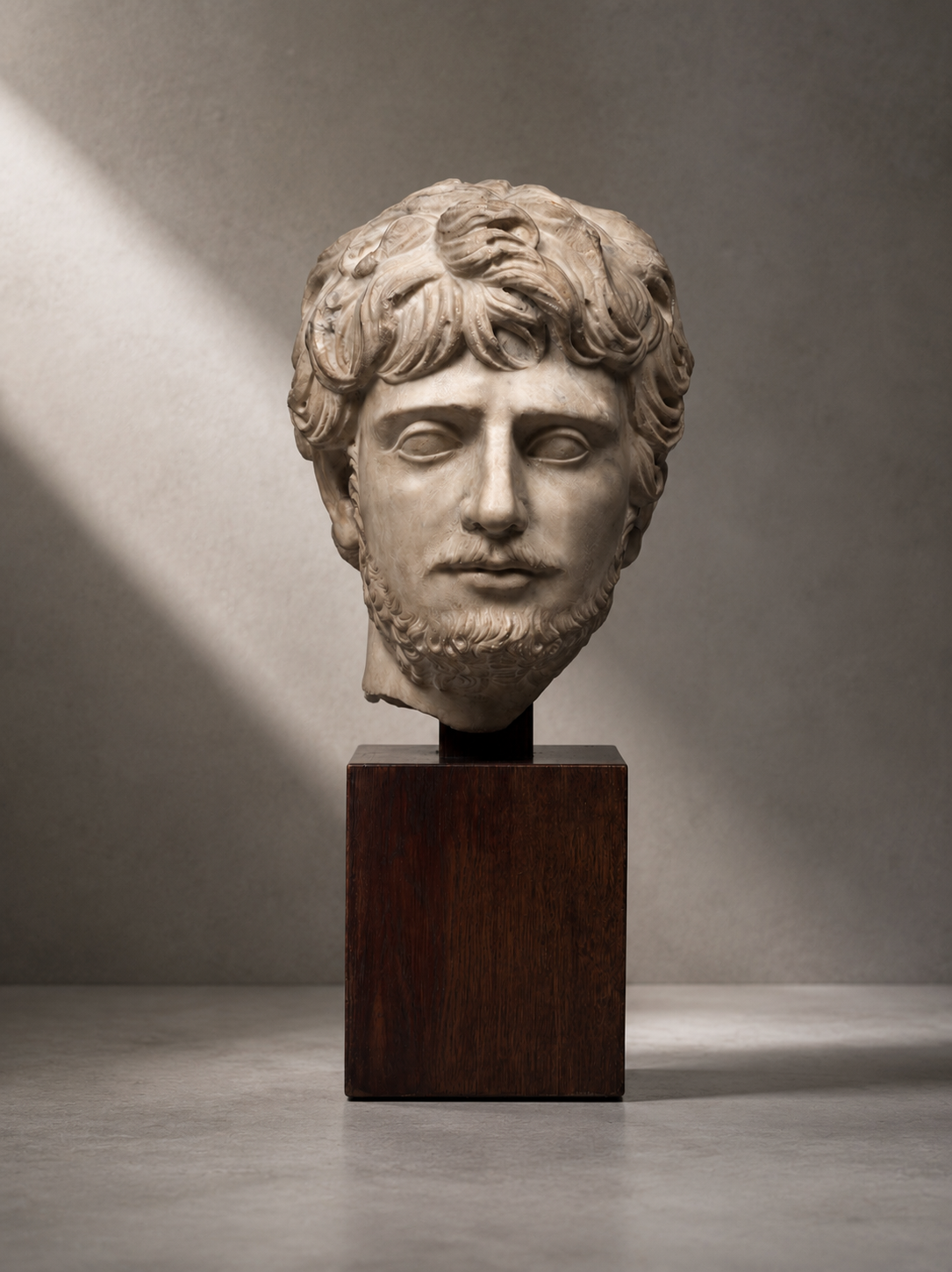
PORTRAIT OF A YOUNG MAN
Italy, 17th Century
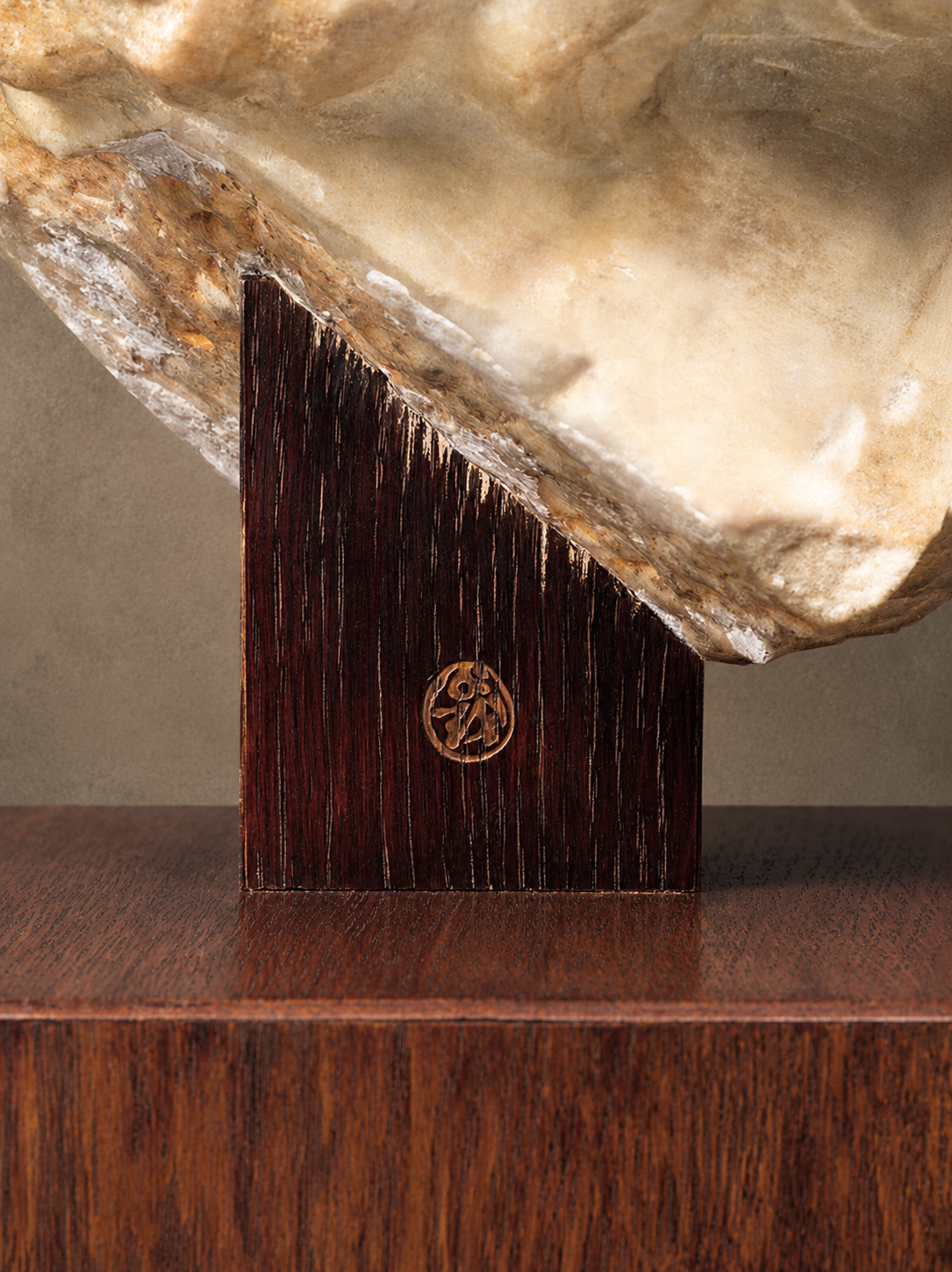
marble, on a custom-made wood base bearing the stamp of Kichizô Inagaki (1876-1951)
31 x 23 x 25 cm | 12 1/4 x 9 x 9 3/4 in
height with base: 51 cm | 20 in
The present marble portrait, executed with notable refinement and technical assurance, is conceived in conscious dialogue with Roman Imperial portraiture, drawing particularly on sculptural models of the Antonine period. The youthful sitter, depicted with a short beard, recalls the physiognomic conventions established under Hadrian and further developed during the reign of Commodus, while the expressive arrangement of the hair evokes the idealised iconography associated with Alexander the Great. This deliberate synthesis of classical references suggests an image intended not as a specific likeness, but as an idealised evocation of youthful virtue, heroism, and martial character, perhaps in the guise of a Roman military figure.
Produced in seventeenth-century Italy, the work reflects the enduring fascination with antiquity that shaped artistic production in the post-Renaissance period, when sculptors frequently reinterpreted ancient models through a contemporary lens, creating works that were both antiquarian in spirit and decorative in function.
The sculpture is mounted on an elegant custom-made wooden base bearing the stamp of the Japanese mount maker Kichizô Inagaki (1876–1951), known professionally as Yoshio. Inagaki’s mounts are today recognised as works of art in their own right, distinguished by their exceptional craftsmanship and their sensitive dialogue with the objects they support. Active in Paris during the first half of the twentieth century, his bases became highly sought after among collectors, dealers, and museums, and were associated with major figures of the period, including Auguste Rodin and prominent dealers such as Joseph Brummer, Dikran Kelekian, Charles Ratton, and Paul Guillaume.